| | | Welcome to TechRadar's Year In Review | | | |  | So farewell, 2025 – you were frequently exciting, regularly chaotic, occasionally frustrating but always interesting. And that’s how we like it around here.
It was a year in which often fairly iterative improvements to hardware were overshadowed by rapid and significant advances on the computing side of things. I’m talking, of course, about AI, which is now so dominant within the tech world that it’s increasingly hard to find a device that doesn’t have an AI brain. Not that I’m complaining, because the leaps made in 2025 by the likes of OpenAI’s Sora and Google’s Gemini were truly astonishing; the pace of change is such that it feels like we’re squeezing about a decade’s worth of advances into each year now, and I wouldn’t like to predict what the state of play will be in 12 months’ time. Well, other than to say that we’ll be taking for granted things which seem almost impossible right now – although as our AI Editor Graham Barlow notes below, maybe we’re already doing that.
In comparison, it often looked in 2025 as though things were slowing down on the hardware side. Could Apple really make its already-excellent MacBooks much better? Could Samsung improve much on the superb Galaxy S series? Was there much scope for OLED TVs or wireless headphones or mirrorless cameras to develop?
The answer was yes, yes and yes. Though the upgrades to many models may not have been as big as those on the software side, they were frequently excellent in their own right. The improvements to battery life, screen tech and camera lenses may not be as flashy as those on the AI front, but they can make a real difference to how we use our devices on a daily basis. In many ways, tech fans have never had it so good.
Whether that will continue in 2026 remains to be seen. AI now looks to be having a direct – and negative – effect on component prices, which could make your favorite new phone or laptop more expensive in the coming year. We might also see stock shortages in some areas, which could further inflate those price tags.
It looks like we’re set for another year of exciting, chaotic, frustrating and interesting news, then – and we’ll be here with you every step of the way. Until then, I hope you’ve enjoyed reading TechRadar in 2025, and have a happy New Year! Marc McLaren, Global Editor-in-Chief | | | I bent reality, but I failed to bend an iPhone | 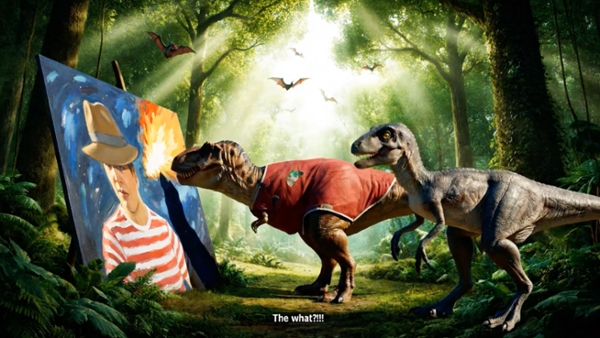 | | 2025 was the year AI image-creation became limited only by our imaginations (Future) | | | This year was marked by astonishing leaps in AI capabilities, which I tried to not only report on but experience in full, writes Lance Ulanoff, Editor at Large. From my first experience with ‘vibe coding’ to wild leaps of fancy with Veo 3 (and later the Sora app) to creating my own digital double, AI’s fast-changing capabilities constantly amazed me. Never in four decades of covering emerging technologies have I seen anything like it: AI’s rise continues to be a heady mixture of enthusiastic adoption tinged with white-knuckled fear about what it all means for jobs, and for humanity, and nothing we saw in 2025 did much to resolve that anxiety. The rise of humanoid robots was a trend that shocked and pleased me in equal measure, though I’ve tried to temper my enthusiasm with the knowledge that clever marketing and eye-popping videos will only get us so far. We all want the ultimate home robot, but I still don't think many of us are willing to pay $20,000 to get it. | | | | This was the year we started taking AI for granted |  | | 2025 was a year of ups and downs for Sam Altman and OpenAI (Getty Images) | | | | |  | For all the talk of breakthroughs and hype, 2025 felt less like the year AI changed everything and more like the year it quietly became unavoidable, writes Graham Barlow, Senior Editor, AI. While the much-hyped arrival of super-powerful artificial general intelligence (AGI), predicted for 2025 by many, simply hasn’t materialized, the year has still been a strong one for companies like OpenAI, xAI, Anthropic, and Google. That said, there have also been some massive flops; and as for Apple, it feels like yet another year in which it slipped further behind in the AI race.
ChatGPT maintained its vice-like grip as the most popular AI chatbot in the world, though it hasn’t been plain sailing for OpenAI. Legal challenges, particularly the copyright infringement claim brought by The New York Times, have continued to dog the company, and in June its servers crashed for a couple of days, giving the world a brief taste of life without the ubiquitous chatbot. OpenAI then fumbled the ball with the release of its GPT-5 model, which came across as cold and unemotional compared to the previous GPT-4o. For millions of users who’d come to rely on the chatbot as something closer to a trusted companion it felt like a best friend had undergone a personality transplant overnight, forcing OpenAI to make the legacy 4o model available again. The company has also lost a little ground to Google’s Gemini in recent months. The arrival of Gemini 3 Pro in November was well received, and on the image front, Gemini’s Nano Banana and Nano Banana Pro proved superior to ChatGPT for image generation. OpenAI responded with a new image-generation model in December. AI-powered pets and toys also began to appear this year. We took Moflin for a spin, until we accidentally fried its battery. More broadly, the dominant theme of the year was that every product must now have AI built into it in some form, and no company exemplifies this approach better than Microsoft, which has spent the year enthusiastically stuffing Copilot into just about everything it makes. Finally, the year looks set to end on a high note for Amazon. Alexa+, the AI-powered version of Alexa that Amazon has been promising all year but hasn’t yet managed to fully roll out, may finally be getting a web version, at least in the US. | | | | Slim pickings for thin phones, and hints of a tri-fold future | 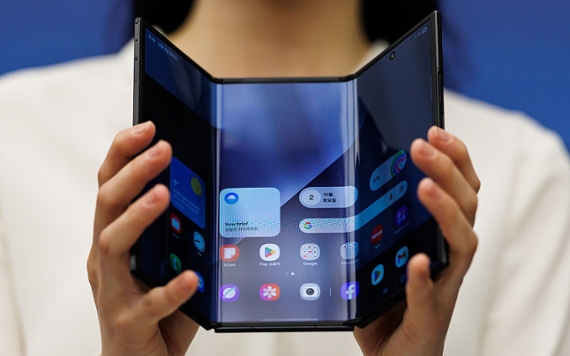 | | 2025 saw Samsung unveiling its first tri-folding phone (Getty Images) | | | | |  | 2025 was the year of the super-thin phone, writes Roland Moore-Colyer, Managing Editor, Mobile Computing, with the release of the Samsung Galaxy S25 Edge in the first half of the year, and the iPhone Air in the second. These handsets grabbed headlines with their svelte proportions, but so far sales figures have yet to match the hype. That’s likely due to their relatively high prices in the face of already pretty slim iPhones and Galaxy and Pixel handsets, all of which saw the expected yearly upgrades with the iPhone 17, Galaxy S25 and Pixel 10 lines respectively. While the upgrades to the iPhone 17 family appeared incremental at first glance, I'd argue they're a bigger deal when you dig into the details: there was a new design and cooling system for the Pro phones, the standard model finally got a 120Hz display, and Apple's 48MP 'Fusion' camera came to every iPhone in the lineup, including the Air (the Plus model went the way of the dodo). Some of the most interesting phones came from smaller brands, with the Nothing Phone 3 offering something a little different without scrimping on flagship features. There was the Oppo Find X9 Pro with its strange but useful camera kit, while the OnePlus 15 was the only phone to earn a maximum five-star review from us this year. There were also a clutch of affordable phones from the likes of Motorola and Xiaomi, proving that you don’t have to pay a lot to get a very capable smartphone these days. We saw further evolution in the folding phone space, with the Samsung Galaxy Z Fold 7 leading the way, and Samsung also unveiled its first tri-folding phone, with the Galaxy Trifold joining Huawei's Mate XT, and teasing a future of devices that truly blend phones and tablets. We may even see a foldable iPhone in 2026, but don’t hold your breath. | | | | RAM drama enlivens a year of evolution over revolution | 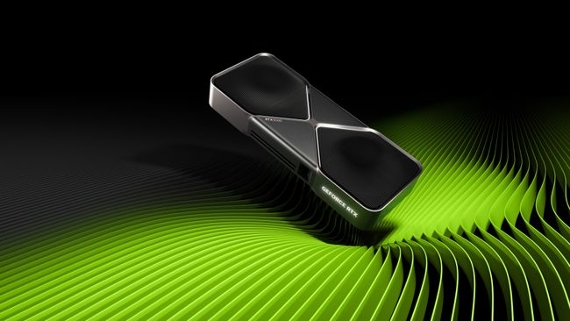 | | 2025 saw Nvidia releasing its eagerly awaited RTX 5000 series of GPUs (Nvidia) | | | | |  | When it came to computing, 2025 didn't start off as the most promising year, writes Matt Hanson, Managing Editor, Core Tech. While 2024 felt like a year of revolutionary change, with the explosive growth of AI, the fall of Intel, and the rise of Arm-based laptops that were actually worth buying, this year has felt more like we're in a holding pattern, as the innovations of the past few years are iterated on and refined. The year kicked off with Nvidia launching its latest generation of consumer graphics cards, the RTX 5000 series, at CES 2025, and they encapsulated the ‘evolution, not revolution’ theme, with some great new features that haven't fundamentally shaken up the industry, as the introduction of ray tracing with the RTX 2000 series did. Of course, making a great product even better is no bad thing, and our components editor and GPU expert John Loeffler was suitably impressed, enthusing in his RTX 5090 review that “If you're a gamer, you'll still get impressive gen-on-gen performance improvements over the celebrated RTX 4090, and the Nvidia RTX 5090 is really the first consumer graphics card I've tested that can get you consistent, high-frame-rate 8K gameplay.” I have an RTX 5090 and I love it, and I've also been impressed by its 8K performance in modern games, but with the majority of PC gamers still playing at 1080p, this high-end GPU might be a bit too expensive to justify. Other releases from AMD and Intel, plus Apple’s latest M5 chip, continued the theme of impressive releases that don’t massively change the computing landscape. Perhaps the biggest event in 2025 was the continued rise of AI. Recently, the AI boom has led to a global shortage of memory, which has in turn caused an increase in the prices of devices that use it. All of a sudden, PCs, RAM, and GPUs look set to get increasingly expensive, though some, like our computing editor Christian Guyton, aren’t too worried – yet. Personally, the end-of-year drama is making me nostalgic for those early months when 2025 felt rather boring. | | | | Android XR arrives to challenge Meta's dominance | 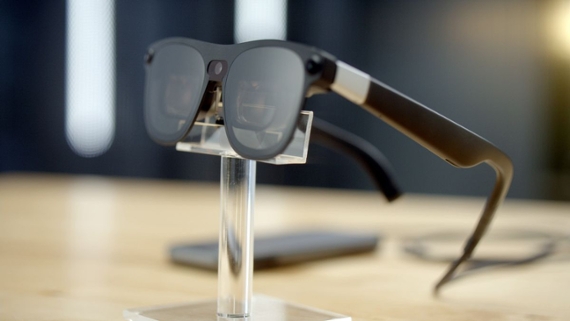 | | The Xreal Project Aura will be the first smart glasses to feature Android XR (Google) | | | | |  | This year XR or 'extended reality' took center stage, thanks in large part to Android XR hardware finally breaking cover in the shape of the Samsung Galaxy XR headset, writes Hamish Hector, Senior Staff Writer. We also tested prototype Android XR glasses ahead of their expected release in the coming year, and they’re impressive (the glasses at least, the headset less so right now). Google, along with its Android partners, looks set to seriously challenge Meta in 2026. For its part Meta debuted several new smart wearables over the past 12 months, including two pairs of Oakley smart glasses – the stylish HSTNs and the sporty Vanguards, the latter of which are perfect for runners when used with a compatible Garmin watch. We also saw a Gen 2 model of the Meta Ray-Bans, and the company's latest step towards full-on AR specs, the Meta Ray-Ban Display glasses, which as you can probably guess feature a display for the specs to relay info visually. We’ve tested them, and they’re everything Google Glass wanted to be, but right now they're not easy to get hold of. What about VR headsets proper? Valve surprised no one (because the device was so heavily leaked before launch) with its Steam Frame headset announcement. Key details like the price are still a mystery, but it will be landing in 2026 – and when it does, the spec sheet teases a device that could seriously challenge the reigning champion of VR, the Meta Quest 3. Depending on how Valve handles the launch, I wouldn’t be surprised if it makes all other headsets feel obsolete – even the Galaxy XR and Apple Vision Pro. Talking of Apple's mixed-reality spatial-computing headset, we got a new version with an M5 chip and comfier strap, but while it's a worthwhile upgrade the price still feels too high. | | | | The era of giant, cheap TVs is here | 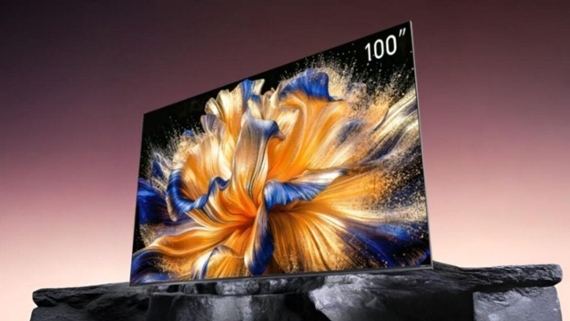 | | Hisense led the way on giant cheap TVs, and was the first to launch next-gen RGB TV tech (Hisense) | | | | |  | This year saw two really interesting developments in TV technology, writes Matt Bolton, Managing Editor, Entertainment, with the first being the arrival of a whole new kind of ‘Tandem RGB’ OLED TV panel from LG. This appeared in the LG G5, helping it to score the maximum five stars in our review, and in the fantastic Panasonic Z95B, enabling both TVs to hit stunning levels of brightness and color depth, but with reduced power consumption. However, this new screen technology didn’t win either of those sets our TV of the Year award – that went to the Samsung S95F, which not only earned its own perfect 5-star review, but was also voted the top TV in the most categories by the judges in our flagship OLED TV showdown, which pitted it against the LG G5, Panasonic Z95B, and Sony Bravia 8 II. The second big tech development was the arrival of RGB mini-LED tech – and, make no mistake, this is the next big thing. It’s more efficient than current mini-LED tech, and is capable of richer colors and less light leakage from bright areas to dark ones, and it could be the tech to finally knock OLED off its perch.
We know that Samsung, LG, TCL and Hisense will all launch RGB mini-LED TV ranges in 2026, but the Hisense UX116 was the only TV to use it in 2025 – and it was a mixed bag, with performance issues that disappointed given its eye-wateringly high price. Still, we’re excited to see how this tech develops. But the biggest thing in TVs this year was the TVs themselves – as in, they got big and they got affordable. TCL and Hisense launched 85-inch and 100-inch TVs that were within the budgets of regular mortals, and 75-inch TVs are becoming positively cheap, while still being good. While new tech is exciting, huge TVs like the Hisense U8N and TCL QM7K becoming more affordable is the change that made the biggest difference for customers. | | | | The year the big dogs bit back | 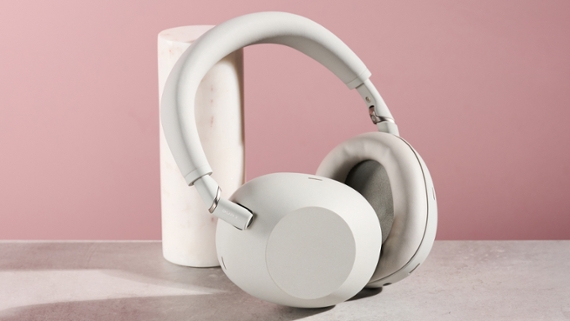 | | The Sony WH-1000XM6 arrived to take over the top spot in our best headphones rankings (Future) | | | | |  | If 2024 was the year niche UK hi-fi brands took over the dance floor amid a hiatus from audio's heavy hitters (see Bowers & Wilkins' fantastic Pi8 earbuds or Cambridge Audio's inaugural, affordable, adorable P100 cans), 2025 was the year the big dogs returned to the party and got their groove back, writes Becky Scarrott, Audio Editor.We got five major headphones releases in 2025, starting with the Beats Powerbeats Pro 2 earbuds in February. The hotly anticipated update to the 2019 Powerbeats Pro proved that Apple could indeed deliver heart-rate monitoring in its earbuds. However, this roundup wouldn't be complete without a nod to the biggest launch of them all: the fall arrival of Apple's AirPods Pro 3. The shape's different, the ANC is twice as good, and yes, like the Powerbeats Pro 2 they also keep tabs on your ticker, in a slightly different way, and with increasing third-party fitness-app support. Still the most popular earbuds in the world? Absolutely. Elsewhere, Spotify Lossless finally landed, at no cost to Premium subscribers, offering almost-as-good-as-Apple-Music resolution at up to 24-bit/44.1kHz. While Lossless wasn't a huge hit with fans initially, the big green streaming machine's popularity continues to grow, despite concerns over artist payments. Oh, and if you take note of just one audio brand name this year, let it be WiiM. As Sonos continues to tackle trust issues among its once-loyal fanbase, the plucky multi-room underdog unveiled its WiiM Sound (and now the WiiM Sound Lite) premium hi-res speakers – and the firm would love to help you build your wireless sound system around them. | | | | The Switch 2 makes waves, and GTA 6 looms over 2026 |  | | Donkey Kong Bananza was one of the standout games of the year (Nintendo) | | | | |  | Gaming in 2025 was largely dominated by the arrival of the Nintendo Switch 2, writes Rob Dwiar, Managing Editor, TechRadar Gaming. It’s a safe improvement on the original Switch, and one that epitomizes the ‘evolution not revolution’ approach to console development. Sony had its own say in the gaming handheld space, breathing new life into the PlayStation Portal handheld device, which is now capable of excellent cloud streaming. This has elevated the handheld, which we were already big fans of, to impressive new heights. It’s been a year to forget for Xbox, however, and its woes only accentuated the aforementioned successes for Nintendo and Sony. For starters, more Xbox games – including Gears of War: Reloaded – arrived on PS5, while others are set to follow, including the symbol of Xbox itself, Halo. Meanwhile studios were shuttered and prospective games cancelled, and to make matters worse the Xbox X/S were outsold by a tiny family console, the Nex Playground, over Black Friday. All in all it’s been tough going for Team Green. As for 2026, it’s beginning to feel like the pace of progress towards next-gen consoles will quicken, and the game release calendar looks well stocked. However, a titan looms: Grand Theft Auto 6 is now slated for release in November after being originally planned for late 2025, and the whole gaming world is going to revolve around its arrival. | | | | A memorable year for glass as well as for cameras | 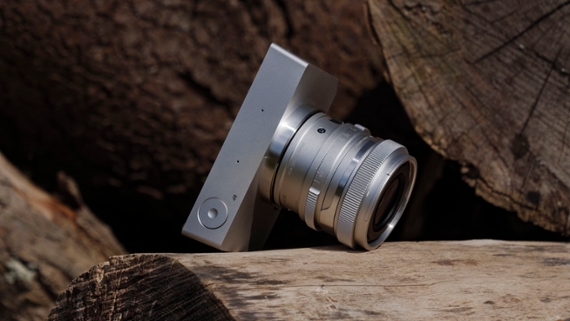 | | If Apple made cameras: the Sigma BF was one of 2025's standout launches (Future) | | | | |  | 2025 was full of pleasant surprises for photographers, writes Tim Coleman, Cameras Editor. The Sigma BF was truly out of the ordinary, being dubbed ‘the camera Apple would have made’, while the Caira with its Nano Banana AI skills showed us a glimpse of how on-the-go generative editing can work in an actual camera. Adobe should be worried – and it’s since made Photoshop available in ChatGPT. The Sigma BF was truly out of the ordinary, being ‘the camera Apple would have made’, while the Caira, with its Nano Banana AI skills, showed us a glimpse of how on-the-go generative editing can work in an actual camera. Fujifilm and OM System showed us that user experience matters with the quirky X half and retro OM-3 respectively, while Hasselblad and Nikon delivered strong offerings of their own – my favorite stills camera ever, the X2D II, and a new player in the cinema-camera game, the Nikon Zr. A special shoutout goes to Nikon for becoming the best-value camera brand this year, notably for the excellent Z5 II, which is our Camera of the Year, and Z50 II. It was arguably an even better year for new lenses than cameras, with Sigma, Sony and Viltrox in particular knocking it out the park with world-first and affordable optics. Canon continues to lock out third parties from its full-frame camera lineup, but that decision feels more justified after it launched the affordable and capable 45mm F1.2 STM prime. A sense of order was restored towards the end of the year when Canon and Sony launched their anticipated mid-range full-frame cameras: the EOS R6 III and A7 V, both of which are integral to their lineups. Overall, it’s been a good year for camera fans, with demand seemingly remaining strong in the face of competition from increasingly capable smartphones. I’m predicting that the consumer and cinema camera spaces will continue converging in 2026, and I hope the likes of Viltrox expand our options with new and affordable autofocus zoom lenses. | | | | Time's finally up for wasteful wearables, thanks to Google | 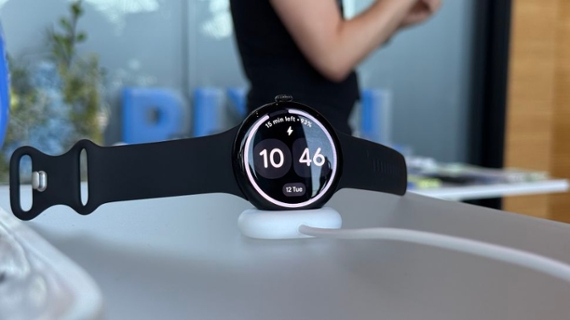 | | The Pixel Watch 4 is the first properly repairable smartwatch (Future) | | | | |  | Last year, I ended my contribution to this round-up by predicting a move away from fitness watches towards screenless trackers, such as a new WHOOP model, writes Matt Evans, Senior Editor, Fitness, Wellness & Wearables. Well, we got not one, but two new WHOOPs, and they were… fine. But, as prices rose, I found the ongoing subscription model far too expensive. However, my prediction that we’d move away from smartwatches hasn’t really been borne out. Wearable tech isn’t changing much in the mainstream, with the highest-profile releases being a slate of new watches from Garmin, Apple, Samsung, Google and OnePlus, and they’ve been as popular as ever. Look beyond those big releases, however, and interesting new stuff is out there. A subscription-free WHOOP competitor band was launched by Polar, while Core Devices, the resurrected Pebble watch company led by its original founder, unveiled a pair of watches inspired by the original Pebble designs, complete with low-power LCD-style screens, and open-source software that anyone with the know-how can tinker with. My innovation of the year, however, came from Google. The Google Pixel Watch 4 is the first properly repairable smartwatch, as you’re able to take it apart and replace the battery and display. This enables you to change individual parts rather than the whole watch, reducing your contribution to e-waste, and saving you money in the long run. Almost every other piece of wearable tech from every other company is still a sealed unit that will ultimately end up being disposed of, and I hope Google's move could be the catalyst for change that the wasteful wearable tech industry sorely needs. | | | | The Year In Entertainment | | | Streaming sensations, box-office flops, and merger madness |  | | The return of Stranger Things was one of 2025's biggest streaming events (Netflix) | | | | |  | The biggest story of 2025 broke late in the year, and it concerned off-screen machinations rather than on-screen drama, writes Tom Power, Senior Staff Writer. Netflix’s $82.7bn bid for Warner Bros. sent shockwaves through the industry when it was announced in early December, and provoked a counter-bid from Paramount Skydance. There’s still a long way to go before a deal is approved, but should Netflix acquire one of the film world’s most iconic studios it would be a landmark moment for the streaming sector, and would represent a seismic shift for the entertainment industry as a whole. Turning to the year's big theatrical releases, and numerous new movies flopped at the box office, including some with huge names attached (I’m looking at you, Dwayne Johnson and The Smashing Machine). Heck, with Captain America: Brave New World, Thunderbolts*, and The Fantastic Four: First Steps all underperforming, even the usually reliable Marvel Studios didn’t have a money-spinning hit on its hands. I wonder how many people predicted that animated and live-action/CGI hybrids would rule the theatrical roost, led by multi-billion-dollar-spinning flicks such as Lilo & Stitch, Zootopia 2, and Ne Zha II… As for the major streaming services, users endured more of the now-customary annual price hikes, Max raised eyebrows by rebranding itself – again – to HBO Max. On the screen, unexpected hits such as HBO medical drama The Pitt, plus Netflix's ‘one-shot’ drama Adolescence and pop-culture phenomenon Kpop Demon Hunters, proved that not even the savviest industry exec can really be sure what viewers will latch onto. Add in the return of unmissable shows including Severance and Stranger Things amid the glut of great and not-so-great film and TV releases, and there was plenty to keep our eyeballs engaged. Now, what have you got in store for us, 2026? | | | | If the subscriptions don't get you, the fridge ads will |  | | Even your fridge will be showing you ads if Samsung has its way (Samsung) | | | Elsewhere we saw big plays from Amazon and Google in the smart home space, with the arrival of their AI-bolstered home assistants. Amazon's Alexa+ and Google's Gemini for Home both entered Early Access beta in the US, and while the early reviews for both have been mixed, it's a promising glimpse into the future of the connected home. Both of those services are subscription-based offerings, and in 2026 subscriptions look set to become a major battleground for smart-home brands, and a bone of contention between brands and their customers, as companies attempt to lock users into their ecosystems. Between that, and brands like Samsung using screen-loaded appliances as advertising billboards around the home, now might be a good time to really think about which brands you want want to invest in as you build your smart home. | | | | | | | | | | © Future Publishing Limited. Reg No. 2008885 England. | | Quay House, The Ambury, Bath BA1 1UA. | | | |